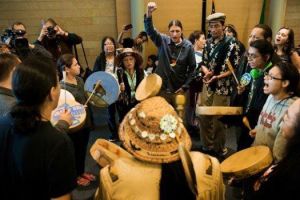
Washington Supreme Court Upholds Tribal Fuel Tax Compacts

On  August 27, 2015, in a unanimous decision, the Supreme Court of Washington affirmed the validity of the motor vehicle fuel tax compacts entered into between the State and numerous Tribes.  Under the fuel tax compacts, the State refunds to the Tribes 75% of the tax collected from tribal and tribal member owned stations, which the Tribes use to support road construction, law enforcement, and other essential government services on their reservations.  These compacts have successfully ended decades of litigation and provide both state and tribal governments substantial revenues to support the important services they provide.  The Court rejected the constitutional challenges urged by Automotive United Trades Organization (AUTO), upholding the authority of the Legislature and the Governor to work constructively with Tribes to meet their respective needs.  Cory Albright and John Sledd of Kanji & Katzen PLLC played a leading role in drafting the brief amicus curiae submitted on behalf of fifteen Tribes, which the Court cited throughout its opinion.
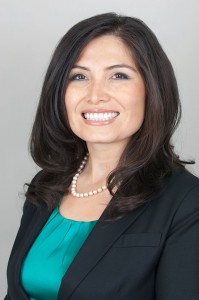
 

Riyaz Kanji featured in SuperLawyers Magazine

The 2015 Michigan edition of SuperLawyers Magazine has a feature article entitled “Riyaz Kanji Walks Tall for Tribal Clients.”  The link to the article is here.

Riyaz A. Kanji stands at his Michigan-made Steelcase treadmill desk, eyes forward. He’s wearing shorts, running shoes, a casual shirt. An office treadmill is a great way to expend a lot of energy without going anywhere, but Kanji has already traveled an impressively long distance to get to his office at Kanji & Katzen in Ann Arbor.

He was born in 1964 Kampala, Uganda, just two years after the city became the new capital of the recently independent Uganda. Kanji’s East Asian family had been in Africa for three generations, and his father was a prominent doctor who had helped found a medical school. But by the mid-1960s, Idi Amin and political violence were on the rise. Some cabinet members were his father’s patients, and they began telling him he should leave as soon as possible. They did—first to England, then Ontario, Canada, before finally settling in the United States.  Read More..

Ethel Branch Named Attorney General of the Navajo Nation

Ethel BranchIt is with a mixture of great pride and sadness that the Firm announces that Ethel Branch is leaving to become the eleventh Attorney General of the Navajo Nation. Since joining the Firm in 2012, Ethel has served its clients with great distinction. She has brought her creative legal mind, unwavering attention to detail and stellar work ethic to bear on matters ranging from natural resources protection to the enforcement of gaming compacts. Moreover, in her position as co-chair of the Seattle Human Rights Commission, Ethel was instrumental in the City’s establishment of Indigenous Peoples Day and in the Commission’s decision to call for a boycott of corporate sponsors of the Washington NFL football team, a call the Firm was pleased to heed. Ethel has been a wonderful colleague, and we have all benefited greatly from her intellect, energy, kindness, and humor.
In short, the Firm will be very sorry to see Ethel go. However, we know that she will bring the same qualities that have made her such a valuable colleague and attorney to her new position. As the head of the Navajo Nation Department of Justice, Ethel will have the opportunity to discharge what she rightly views as a sacred responsibility to her own Nation, supervising a highly qualified team of lawyers engaged in an array of challenging and important legal matters on behalf of the country’s largest Indian nation. We have no doubt that she will work tirelessly to protect and advance the interests not only of the Nation but of Indian country more generally. We wish Ethel the very best in her new endeavor.

Kanji & Katzen Leads Boycott of D.C. N.F.L. Team Corporate Sponsors

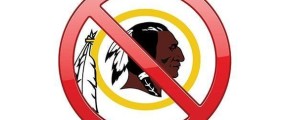
Change.org NFL DC The firm of Kanji & Katzen PLLC has answered the call of the Seattle Human Rights Commission and voted to boycott the D.C. N.F.L. team’s key corporate sponsors until the team’s name changes.  This includes ceasing use of FedEx in the firm’s two offices, and closing the firm’s accounts at Bank of America.

Many people remain unaware that at one time in American history Native Americans were hunted, killed, and redeemed for bounties.  Native scalps, skin, and other body parts of women, children, and men served as proof of the bounty kill; hence the name “r*dskins.”  [Read more…]

Seattle Adopts Indigenous Peoples’ Day

Indigenous Peoples’ Day

Renée Roman Nose, Mayor Murray, Zona Evon, Ethel Branch Photo Credit: Chris Stearns

On Monday, October 13, 2014, the City of Seattle celebrated Indigenous Peoples’ Day for the first time, just one week after the Seattle City Council passed Resolution No. 31538 declaring the observance. On the day of the celebration, Mayor Murray signed the Resolution in a room packed with supporters. This historical moment marks Seattle’s commitment to a unique and human rights-driven approach to engaging with local Native Nations and with the significant urban Indian population that resides within Seattle.

Resolution No. 31538 recognizes that the city is built on Indigenous lands, acknowledges the contributions of the Indigenous Peoples of this region, and seeks to close the equity gap for Indigenous Peoples of Seattle. It establishes as official policy that city staff will participate in the annual Indigenous Peoples’ Day celebrations; encourages businesses, organizations, and public entities in the city to recognize the Day; and strongly encourages Seattle Public Schools to include the teaching of Indigenous Peoples’ history in its curriculum. Seattle Public Schools passed its own resolution on October 1st recognizing Indigenous Peoples’ Day and strongly encouraging district staff to teach the culture, history, and governments of the Indigenous Peoples of the region.

Resolution No. 31538 builds on the efforts of the 1977 delegation of Indigenous Peoples that proposed observance of the day to the United Nations and of the Affiliated Tribes of Northwest Indians, which passed a 2011 resolution supporting the observance of Indigenous Peoples’ Day. The Resolution was proposed by local Native community members and supported by the Seattle Human Rights Commission, which passed its own resolution requesting that the city and Seattle Public Schools recognize the second Monday of October as Indigenous Peoples’ Day.

Mayoral Signing

Native community members, including Matt Remle (with fist raised) and Nahaan (right of Matt), commemorating the day. Photo Credit: Chris Stearns

Successful passage of the Resolution was the result of the stalwart leadership of Matt Remle (a member of the Hunkpapa Lakota (Standing Rock Sioux Tribe) and one of the community members who presented the Indigenous Peoples’ Day proposal to the Human Rights Commission) and Millie Kennedy (a Tsimshian (Raven Clan) attorney at the Northwest Justice Project who helped organize events leading up to and memorializing the Day), the Seattle Human Rights Commission (including Co-Chair Ethel Branch, a member of the Navajo Nation and an Associate at Kanji & Katzen, PLLC), the City Council (including Resolution Co-Sponsors Bruce Harrell and Kshama Sawant), and Mayor Murray (including his Tribal Liaison, Nicole Willis, a member of the Confederated Tribes of the Umatilla Indian Reservation).

The effort was also buoyed by the support of local tribal leaders, including Fawn Sharp (President of Quinault Indian Nation and President of the Affiliated Tribes of Northwest Indians), Leonard Forsman (Chairman of Suquamish Indian Tribe), Ron Allen (Chairman of the Jamestown S’Klallam Tribe), David Bean (Councilmember of Puyallup Tribe of Indians), and Theresa Sheldon (Board Member of Tulalip Tribes and co-author on the ATNI resolution calling for recognition of Indigenous Peoples’ Day).

The city’s action is one positive step forward on the path to advancing indigenous human rights in the Pacific Northwest, and it enhances the city’s status as a human rights city. Indigenous Peoples elsewhere may soon join in this celebration as national momentum builds to observe the second Monday in October in similar fashion. Minneapolis officially recognized the day as Indigenous Peoples’ Day in April, and on October 13, 2014, the City of Bellingham recognized the day as Coast Salish Day. Berkeley and other California cities made the name change long ago, and several states do not observe Columbus Day, including Alaska, Hawaii, Oregon, and Washington. South Dakota observes Native Americans’ Day.

For coverage of this important change in the Seattle Times, please follow these links:
Mayoral Signing: http://seattletimes.com/html/localnews/2024772785_indigenoussigningxml.html
City Council Vote: http://seattletimes.com/html/localnews/2024715781_indigenousdayxml.html
Pre-Vote: http://seattletimes.com/html/localnews/2024708926_columbusday2xml.html